How to Layer Rugs Like an Interior Designer (Without It Looking Like a Mess)
Posted by KAOUTAR TAKI

Layering rugs can make a room feel warmer and more finished. It can also go wrong quickly. When the sizes clash or the patterns compete, the room looks messy instead of styled.
The good news is that how to layer rugs is simple once you know the basics. Start with a larger calm base. Add a smaller rug with more character. Keep the colors connected. Make sure everything stays flat and secure.
If you want the short version, here it is:
- choose a larger neutral base rug
- keep the top rug smaller
- mix one quiet rug with one stronger pattern
- contrast textures
- stay inside one color family
- always use a rug pad
Why rug layering works
Rug layering does three useful things at once.
First, it adds depth. A single rug can look fine, but two rugs create more texture and visual interest.
Second, it helps define space. In an open living room, for example, a top rug can mark the seating area while the larger base keeps the room grounded.
Third, it fixes common layout problems. If your favorite rug is too small, layering it over a larger base is often better than forcing it to work on its own.
It is also one of the easiest ways to make a room feel softer. That is why layered rugs show up so often in bedrooms, living rooms, and rentals with plain carpet.
The 6 rules that make layered rugs look right
1. Start with a neutral base
The base rug should be the larger one. It does not need to be boring, but it should be calm. Ivory, beige, sand, oatmeal, soft gray, and undyed wool all work well.
Jute, sisal, and flatweave wool rugs are strong base choices because they sit flat and do not compete too much with the top layer.
2. Keep the top rug smaller
This is one of the most important rug layering ideas. The top rug should usually be around two-thirds the size of the base rug.
If the base rug is 8x10, the top rug might be 5x7 or 4x6. If the base rug is 9x12, the top rug might be 6x8.
That size difference is what makes the layering visible. Without it, the room can look accidental.
3. Mix one quiet rug with one stronger rug
The easiest combination is one simple rug and one patterned rug. A neutral base gives the top rug room to stand out.
Two bold patterns can work, but they are harder to balance. If you want a safer approach, keep one rug visually quiet.
4. Use texture on purpose
Good layering is not only about color or pattern. Texture matters just as much.
A flatweave kilim under a plush wool rug gives you the contrast that makes layered rugs feel intentional. A rougher natural fiber base under a softer top rug works the same way.
5. Keep the colors connected
Your rugs do not need to match exactly. They just need to make sense together.
A simple way to do that is to start with a neutral base. Then choose a top rug that repeats one or two colors already in the room. That might be a tone from the pillows, artwork, curtains, or upholstery.
6. Always use a rug pad
This is the rule people skip, and it is the one that keeps the whole look from falling apart.
Layered rugs move. They bunch up. Corners lift. A rug pad under the base and a thin grip layer between the rugs help everything stay flat and safe.
The best rugs to layer
If you are wondering how to layer Moroccan rugs, start by mixing textures and pile heights.
Flat Moroccan kilims make strong base rugs. They stay low, light, and easy to place under furniture. Traditional kilims are especially useful here because they sit flat and layer cleanly.
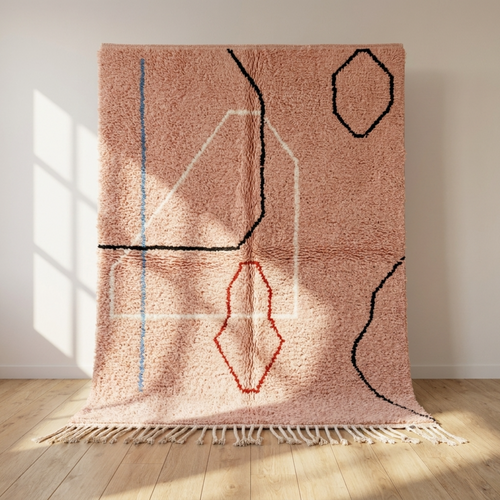
Beni Ourain rugs work well as top rugs because they add softness and visual weight. A colorful Azilal or kilim can also work as the accent layer when the base stays neutral. If you want more background on Berber carpets, their structure helps explain why they layer so well.
If you want to compare styles first, our Beni Ourain vs Azilal comparison guide is a good place to start.
Best base option: Moroccan kilim
A flatweave kilim is one of the safest base rugs for layering. It stays flat, mixes well with other textures, and adds subtle pattern without taking over the room.

Handmade Moroccan Kilim Rug · Perfect Base
Best plush top layer: Beni Ourain
If you want a softer, richer look, place a Beni Ourain on top of a flatter base rug. The contrast in pile height makes this pairing feel polished and balanced.

Authentic Beni Ourain Rug · Plush Top Layer
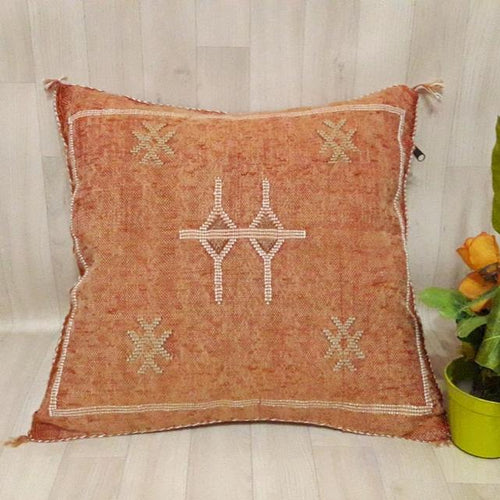
Best accent layer: colorful kilim
If your room already has a calm base, a colored kilim can bring in personality without making the space feel crowded.

Salmon Flat-Weave Kilim · Colorful Accent
For more styling ideas, see our guide on styling vintage kilim rugs in modern spaces.
5 easy layered rug setups to copy
Living room
Use a large jute or flatweave base rug under the sofa and chairs. Add a smaller Beni Ourain on top to define the seating area and soften the room.
Bedroom
Place a large neutral rug under the bed. Then add a smaller patterned rug at the foot. This works especially well when the room needs warmth without too much visual noise.
Dining room
Use a large low-pile base that extends well beyond the table. If you add a second rug, keep it flat and practical so chairs can still move easily.
Over carpet
If you have plain wall-to-wall carpet, a patterned area rug on top can break up the space and make the room feel more finished.
Hallway or entry
In a wider entry, a larger flat base with a narrower runner on top can make the space feel more styled and directional.
Common mistakes to avoid
Most layered rug problems come from trying to do too much at once.
- do not make the top rug too small
- do not stack two loud patterns unless the colors clearly connect
- do not ignore texture
- do not skip the rug pad
- do not force perfect matching
Layered rugs usually look better when they feel relaxed, not over-planned.
Quick answers
Can you layer rugs over carpet?
Yes. It is one of the easiest ways to improve a rental or soften a room with plain flooring.
How do you stop layered rugs from slipping?
Use a non-slip pad under the base rug and a thin grip layer between the two rugs.
What size should the top rug be?
A good rule is around two-thirds the size of the base rug.
Final takeaway
If you want to layer rugs like an interior designer, keep it simple. Start with a calm base. Add a smaller rug with more texture or pattern. Keep the colors connected. Keep everything flat.
That is often enough to make layered rugs look intentional instead of messy.
If you are building the look with Moroccan pieces, start with a flat kilim base. Then add either a plush Beni Ourain or a colored kilim on top. It is one of the easiest combinations to get right.