How to Identify an Authentic Moroccan Rug Before You Buy?
Posted by KAOUTAR TAKI

Buying authentic Moroccan rugs online is not always simple. A rug can look beautiful in a photo, show a familiar pattern, and still miss the marks of real handwork. The clearest clues usually hide in plain sight: the wool, the back of the weave, the fringe, the edges, and the small irregularities that give the rug character.
A real Moroccan rug does not try to look perfect. It carries the rhythm of the hands that made it. One line may move slightly. One symbol may feel softer than another. The wool may show natural texture instead of a flat factory finish.
Those details do not lower the quality. They often show that a maker knotted and finished the rug by hand.
Before you buy, slow down and look closely. Use this Moroccan rug buying guide to spot the signs of handmade quality and ask better questions before you bring a piece home.
What Makes Authentic Moroccan Rugs Different?
Authentic Moroccan rugs look different from factory copies because artisans do not make them as identical repeats. Moroccan weavers work with wool and other natural materials, and they pass those methods from one generation to the next.
The beauty of a handmade Moroccan rug is not only in the design. It is in the touch, the texture, and the small variations that make every piece feel personal. A machine-made rug can repeat a pattern perfectly. A handmade rug has movement.
When you look at a real Moroccan rug, search for signs of human work:
- Wool or natural fibers with visible texture
- A pattern that feels balanced but not mechanically perfect
- Fringe that belongs to the rug structure
- A woven back instead of a glued surface
- Small variations in shape, line, or color
- Clear information about material, origin, and craftsmanship
These details help separate authentic Moroccan rugs from pieces that are only Moroccan-inspired.
Check the Wool and Material Quality
Material is one of the easiest ways to judge quality. A good Moroccan wool rug usually has a warm, natural feel. It does not look overly shiny or plastic. It has softness, weight, and texture.
Wool also changes the way a rug feels in a room. It adds warmth underfoot, softens the space, and gives the design more depth. This is why many buyers prefer handmade Moroccan rugs made from wool rather than synthetic fibers.
Before buying, check the product description carefully. Look for the material, the origin, and clear proof that the seller is offering a handmade Moroccan rug. If the listing only says “Moroccan style” and says nothing about wool, weaving, or artisan work, stop and look closer.
A trustworthy seller should be able to answer simple questions:
- What is the rug made from?
- Is it handmade in Morocco?
- Is it wool or synthetic?
- Are the photos showing the exact rug?
- Can you see close-up texture images?
Clear answers usually mean more trust. Vague descriptions are often a warning sign.
Look at the Back of the Rug
The front of a rug is made to attract you. The back is where the truth often appears.
A handmade rug usually shows its woven structure from behind. You may see knots, lines, and small differences in spacing. These details show that the rug was built thread by thread, not printed on a surface.
A machine-made rug often has a back that looks too uniform, too stiff, or covered with backing material. Some rugs may even have a design that looks printed rather than woven.
When possible, ask for a photo of the back. It is one of the simplest ways to check if the rug has real structure.
Look for:
- Visible weave
- Natural irregularities
- No glued backing
- No plastic-like surface
- A design that appears woven through the rug
A handmade rug does not need a perfect back. It needs an honest one.
Notice the Pattern and Handmade Details
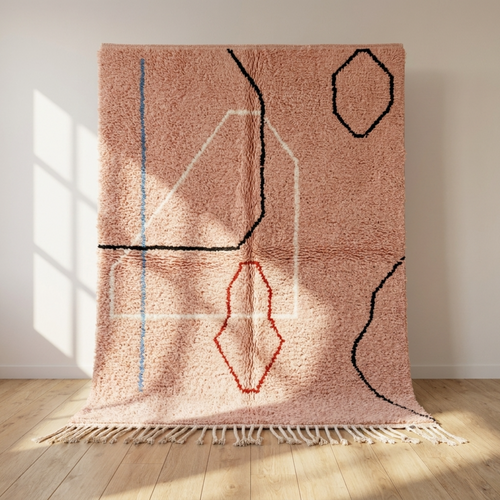
Moroccan rugs are known for their expressive designs. Some are minimal with soft lines, while others use bold colors, geometric patterns, and abstract symbols. Styles such as Azilal rugs and Boucherouite rugs can feel especially artistic because they often play with color, movement, and asymmetry.
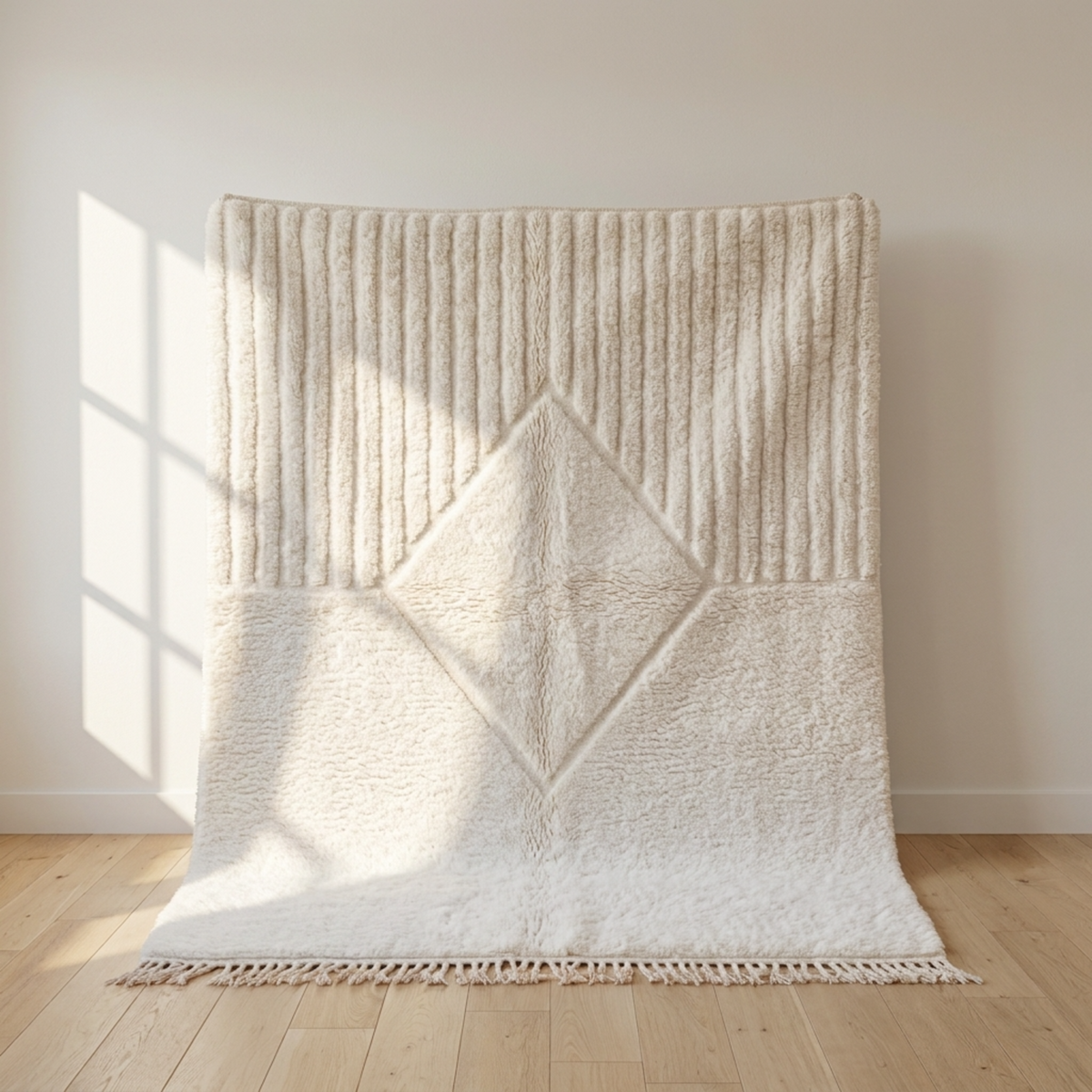
Some Moroccan rug styles are easy to recognize once you know what to look for. Beni Ourain rugs often use soft wool, neutral tones, and simple geometric patterns, so they work especially well in a living room that needs warmth without visual clutter. Vintage Moroccan rugs may show softer colors, aged wool, and small signs of use that add character rather than reduce value.
Azilal rugs often bring more vibrant color, loose geometry, and a freer handmade look. Boucherouite rugs push that energy even further with bold patterns and recycled textile strips. When you compare these berber styles side by side, the weaving tradition becomes easier to read.
This is where handmade rugs become interesting.
The design may not sit perfectly in the center. One line may shift. One shape may echo another without matching it exactly. In a real berber rug, those small changes often become part of the rug’s identity.
The goal is not to find mistakes. The goal is to understand the difference between handmade character and poor quality.
Handmade character looks natural and balanced. Poor quality looks weak, damaged, or unfinished.
Look for:
- Strong weaving
- Natural pattern movement
- Good edge finishing
- Texture that feels intentional
- No loose or damaged areas
- A design that feels unique, not copied
A real Moroccan rug should feel alive without feeling careless.
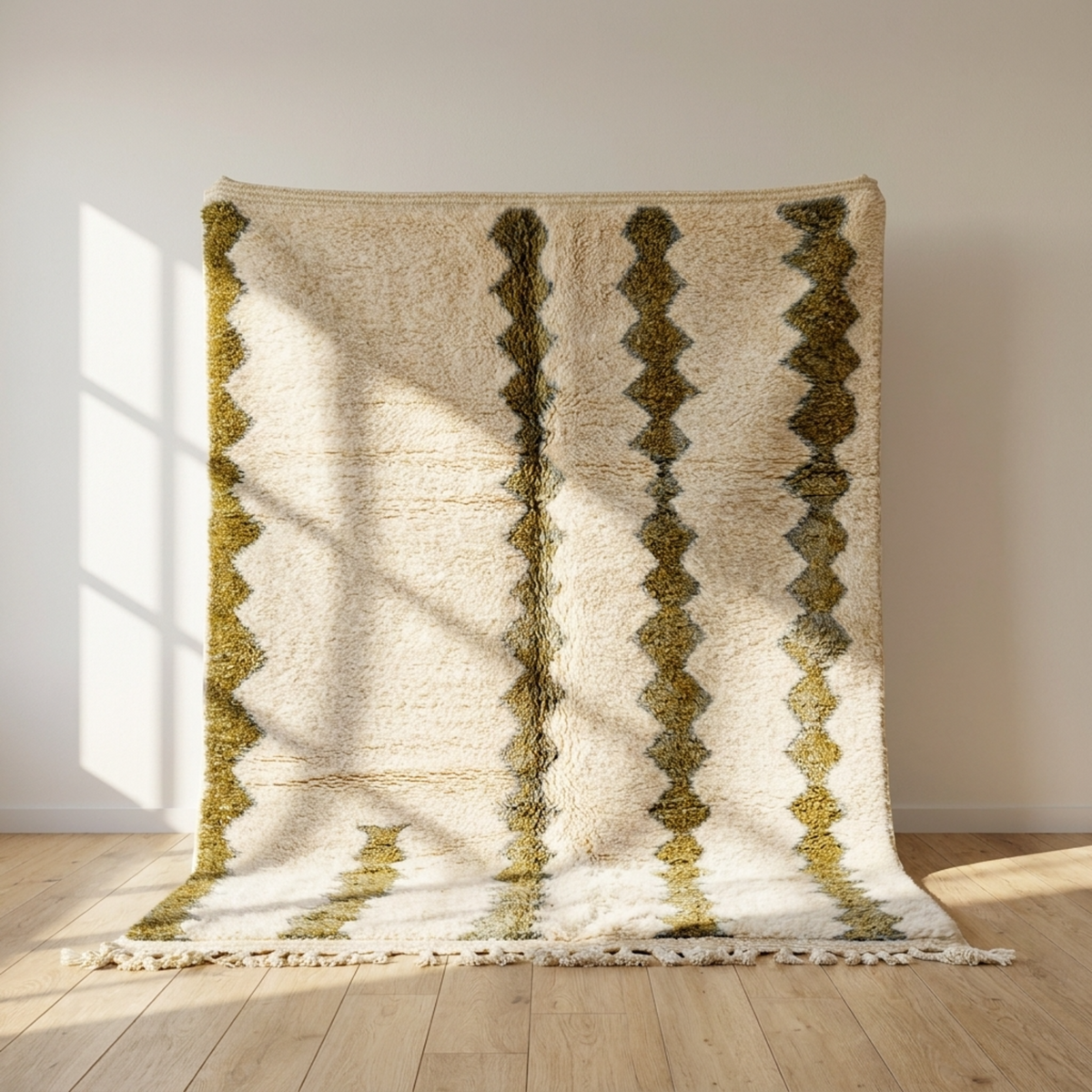
For a better idea of natural texture and handmade details, browse our handmade Moroccan rugs collection, where you can compare wool rugs, geometric patterns, and pieces made for warm living rooms.
Frequently Asked Questions About Authentic Moroccan Rugs
How can you tell if a Moroccan rug is authentic?
You can tell if a Moroccan rug is authentic by checking the wool, the back, the fringe, and the handmade details. Authentic Moroccan rugs often show natural irregularities, visible weaving, and texture that feels warm rather than flat or synthetic.
What is an authentic Berber rug?
An authentic Berber rug usually comes from Amazigh weaving traditions in Morocco and North Africa. Sellers often use the name for many handmade Moroccan rugs because those pieces share traditional patterns, wool, and hand weaving methods.
Are Azilal rugs and Boucherouite rugs authentic Moroccan rugs?
Yes. Azilal rugs and Boucherouite rugs can both qualify as an authentic Moroccan rug when artisans make them in Morocco. Azilal pieces often carry more vibrant color, while Boucherouite rugs stand out for inventive patterns made from recycled textiles.
Final Thoughts
An authentic Moroccan rug is more than a floor covering. It brings texture, patience, and craftsmanship into a room. Before you buy a Moroccan rug, look beyond the first photo. Check the wool, the back, the fringe, the pattern, and the seller’s information.
The best rug is not always the most perfect one. Often, it is the one with quiet handmade details that make the room feel warmer and more personal.
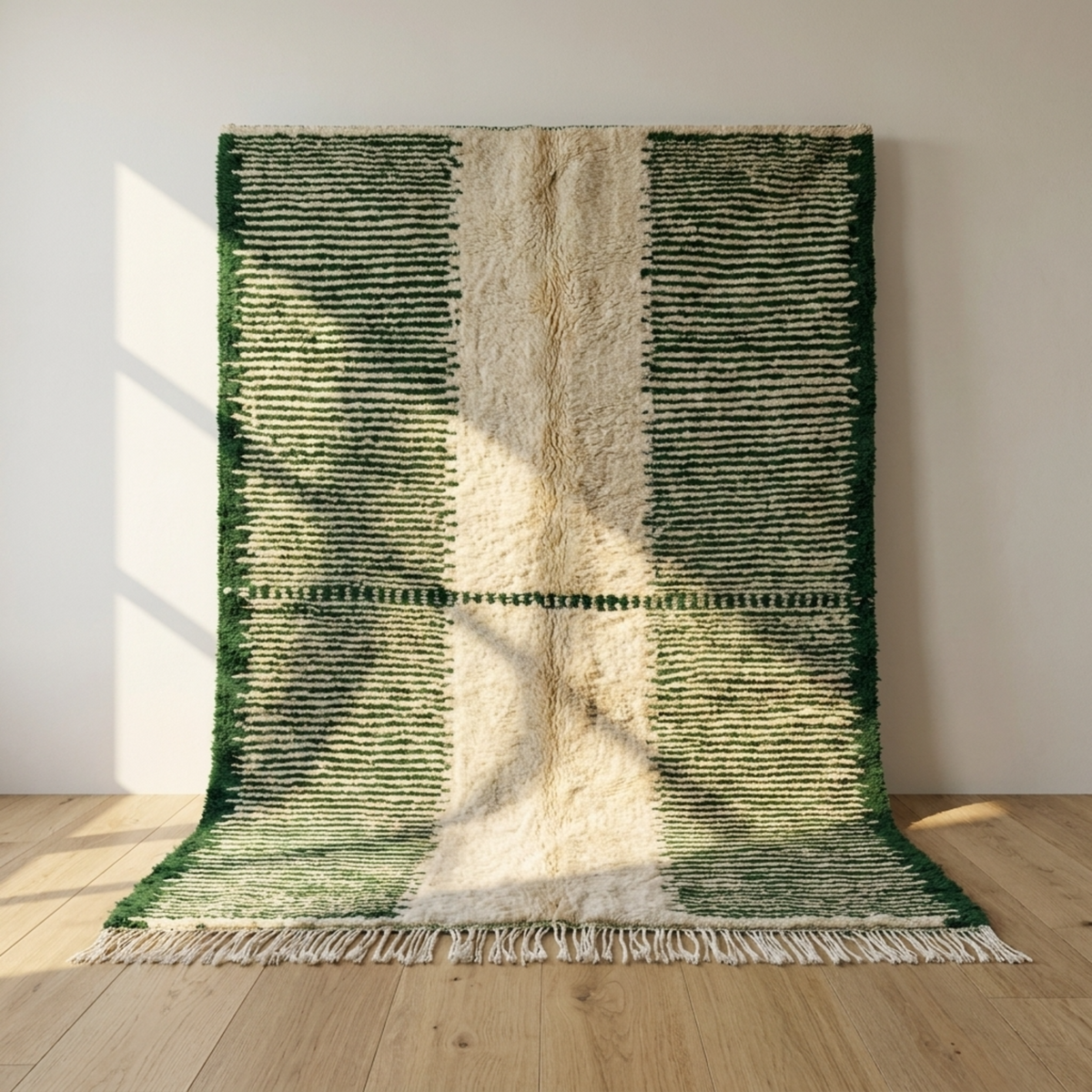
- If you are looking for authentic Moroccan rugs, choose a piece that feels real in its material, honest in its details, and beautiful in its imperfections.
Explore our authentic Moroccan rugs collection to compare wool textures, handmade details, and Moroccan styles made for warm living rooms.