How Moroccan Lamps Create Magical Shadow Patterns at Night?
Posted by KAOUTAR TAKI

Moroccan lamps change a room the moment the sun goes down. In daylight, they read as beautiful home décor. At night, they turn into a lighting fixture and a mood setter at the same time. Light slips through pierced brass, lands on the wall, and spreads into intricate patterns that feel warm, soft, and a little theatrical.
That shadow play is why people keep coming back to Moroccan lamps instead of flat, ordinary lighting. A Moroccan brass lamp gives you brightness, texture, and atmosphere.
A skilled artisan shapes and finishes many handcrafted Moroccan lamps by hand. That attention to detail shows up when the lamp is off, but it matters even more when the bulb is on. Every cutout, curve, and pierced panel changes the way the shadows fall.
Why Moroccan lamps look different after dark
Moroccan lamps do not throw light in a flat wash. They filter it. Small openings in the metal lamp let the glow escape in tiny beams, so the walls and ceiling pick up movement, detail, and depth.
That effect works in more than one kind of room. A Moroccan pendant light can anchor dining areas, entryways, and living rooms. A Moroccan table lamp can calm down a bedside table, console, or reading corner. A floor lamp or hanging light can add height and drama without making the room feel harsh.
This is where Moroccan design stands apart from many modern fixtures. Instead of flooding the room with bright overhead light, Moroccan lights create ambient light that feels layered and lived in. If you want a space to feel relaxed at night, this approach works better than one strong bulb in the middle of the ceiling.
How the shadow patterns happen
The secret sits in the pierced brass or cut metal shade. When the bulb turns on, each opening acts like a tiny window. The result is a web of intricate patterns across nearby surfaces.
Three things shape the final look:
- the size and density of the cutwork
- the distance between the lamp and the wall
- the warmth and strength of the bulb
Place the lamp close to a wall and the pattern looks sharper. Move it farther into the room and the shadows soften. Use a warm bulb and the whole effect feels richer.
If you want context for how Moroccan design developed, the Met’s Islamic Art department and this overview of Moroccan architecture are useful starting points. Both help explain why geometric repetition, pierced metal, and ornament matter so much in this visual language.
Which lamp style creates the best effect?
Different shapes create different results.
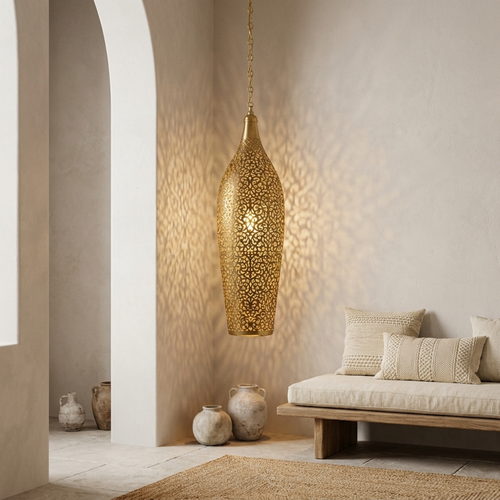
A pendant lamp usually gives the biggest visual payoff because it throws light outward and downward. That makes it ideal for dining rooms, hallways, and living rooms where you want the lamp to read as a focal point.
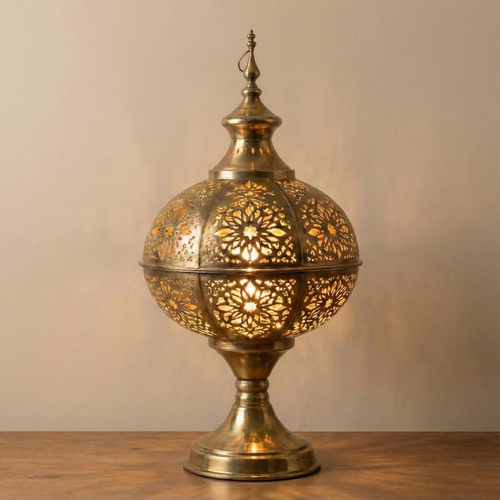
A table lamp feels softer and more intimate. It works well in bedrooms, reading corners, and shelves where you want warmth without too much brightness.
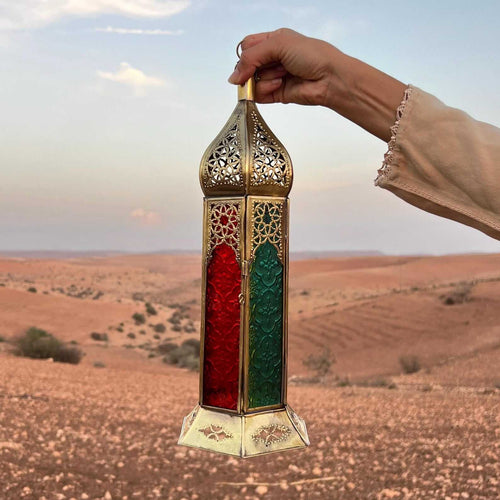
Hanging lamps and lanterns often create the strongest pattern on upper walls and ceilings. If you love the look of shadow play, this style gives you the most obvious nighttime effect.
A floor lamp can also work beautifully in corners that need height. It is a good choice when you want ambient light near a chair, a bench, or a layered rug setup.
How to style Moroccan lamps at home
Start with natural textures. Brass looks better beside wool, wood, linen, clay, leather, and woven fibers than it does beside cold glossy finishes. Neutral walls also help because they catch the shadows clearly.
For living rooms, place a handcrafted Moroccan pendant or lantern where the pattern can reach a nearby wall. For bedrooms, a table lamp with a warm bulb usually feels better than a bright overhead fixture. For entryways, hanging lamps create an immediate first impression.
Warm bulbs matter here. If you want to understand why, this guide to color temperature is a helpful reference. In practice, warm light keeps the brass lamp inviting and makes the shadow patterns easier on the eyes.
Products to recreate the look
If you want this effect at home, these three pieces fit the article perfectly. You can also browse the full Luminous Lighting collection for more Moroccan lights in the same style.
1. Moroccan brass pendant light

This pendant light is a strong pick for dining rooms, entryways, and living rooms. The openwork surface helps the shadows travel, so it works especially well when you want a clear patterned effect on nearby walls.
2. Moroccan brass table lamp

A table lamp is the easiest way to bring Moroccan lighting into a bedroom or reading corner. It gives you ambient light without overpowering the room, and the smaller scale makes the glow feel personal.
3. Moroccan hanging lantern

This hanging lantern suits hallways, stair landings, and cozy corners where you want visible shadow patterns and a more intricately designed statement piece.
Final thoughts
Moroccan lamps work because they do more than illuminate. They shape the room after dark. Choose the right lamp, use a warm bulb, and give the pattern a wall or ceiling to land on. That is when the magic shows up.
If you want a light that feels decorative even before you switch it on, Moroccan pendant lights, table lamps, and hanging lamps are still some of the best choices around.