


Why Moroccan Leather Poufs Fit Modern and Boho Homes
Posted by KAOUTAR TAKI

A Moroccan leather pouf can cross style lines better than most accent pieces. It works in a pared-back modern living room, and it works just as well in a layered boho setup. That flexibility is why Moroccan leather poufs keep showing up in strong home decor schemes long after trendier pieces fade out.
The reason is not complicated. A well-made pouf adds texture, warmth, and function without taking over the room. It can read as relaxed in a boho style interior, but it can also look precise and intentional in a more architectural design style.
The silhouette stays clean enough for modern interiors
Modern rooms depend on discipline. They usually favor fewer objects, stronger lines, and better spacing. A pouf fits that logic because it sits low, keeps a compact profile, and avoids the visual weight of another chair.
That matters when the room already has a straight sofa, a sharp-edged coffee table, and built-ins with crisp geometry. In that context, a pouf softens the composition without weakening it. Instead of adding clutter, it introduces relief.
This is one reason many interior designers use leather accents in restrained spaces. Leather brings variation in surface and tone, so the room feels warmer without losing structure.
Boho rooms benefit from the same piece for different reasons
Boho homes usually ask for tactile materials, layered textiles, and furniture that feels collected rather than staged. Leather poufs slide into that environment naturally.
They sit comfortably beside wool rugs, woven baskets, plaster walls, wood grain, and vintage textiles. They also help balance more expressive statement pieces. If the room already has pattern and color, a pouf in camel, cognac, or worn brown can anchor the mix.
That is where Moroccan leather has a real advantage. The finish rarely looks flat. Good pieces show subtle variation, visible seams, and a hand-touched surface that feels more convincing than factory-perfect decor.
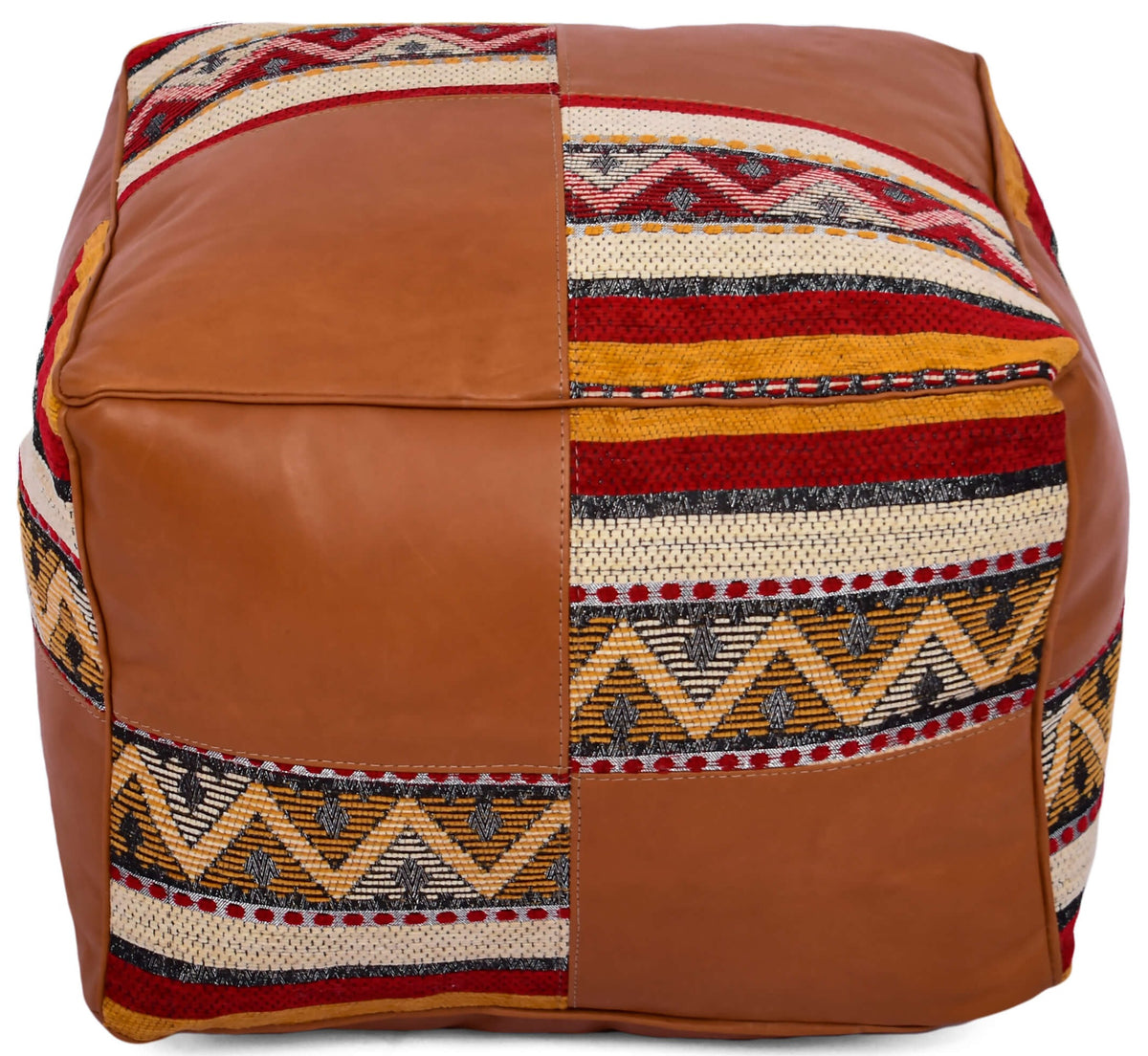
A multicolor pouf like this works well when the room feels calm and needs one handmade accent with more personality.
Material quality helps the pouf work in both styles
A strong pouf does more than look good in photos. It should feel durable, supple, and honest up close. That usually comes down to genuine leather, careful stitching, and traditional methods that respect the material.
Many buyers also look for details like hand stitched panels, natural grain, and construction that does not feel stiff or synthetic. In higher-end pieces, you may also see references to goat leather or vegetable tanning, both of which appeal to shoppers who want craft and material character rather than a glossy mass-market finish.
Leather has been prized for durability for centuries, and that history still matters in a room you actually use. A pouf should work as extra seating, a footrest, or even a low side table with a tray on top. Leather remains valuable for exactly that reason: it combines resilience with warmth.
A pouf softens modern lines and steadies boho layers
In modern interiors, the usual problem is too much rigidity. The sofa, shelving, console, and coffee table can all push the room toward hard angles. A pouf breaks that rhythm and adds a more relaxed note.
In boho rooms, the challenge is different. The space may already feel soft, but it still needs structure. This is where square poufs often do their best work. They ground the room, create a stronger visual stop, and keep layered decor from drifting into visual noise.
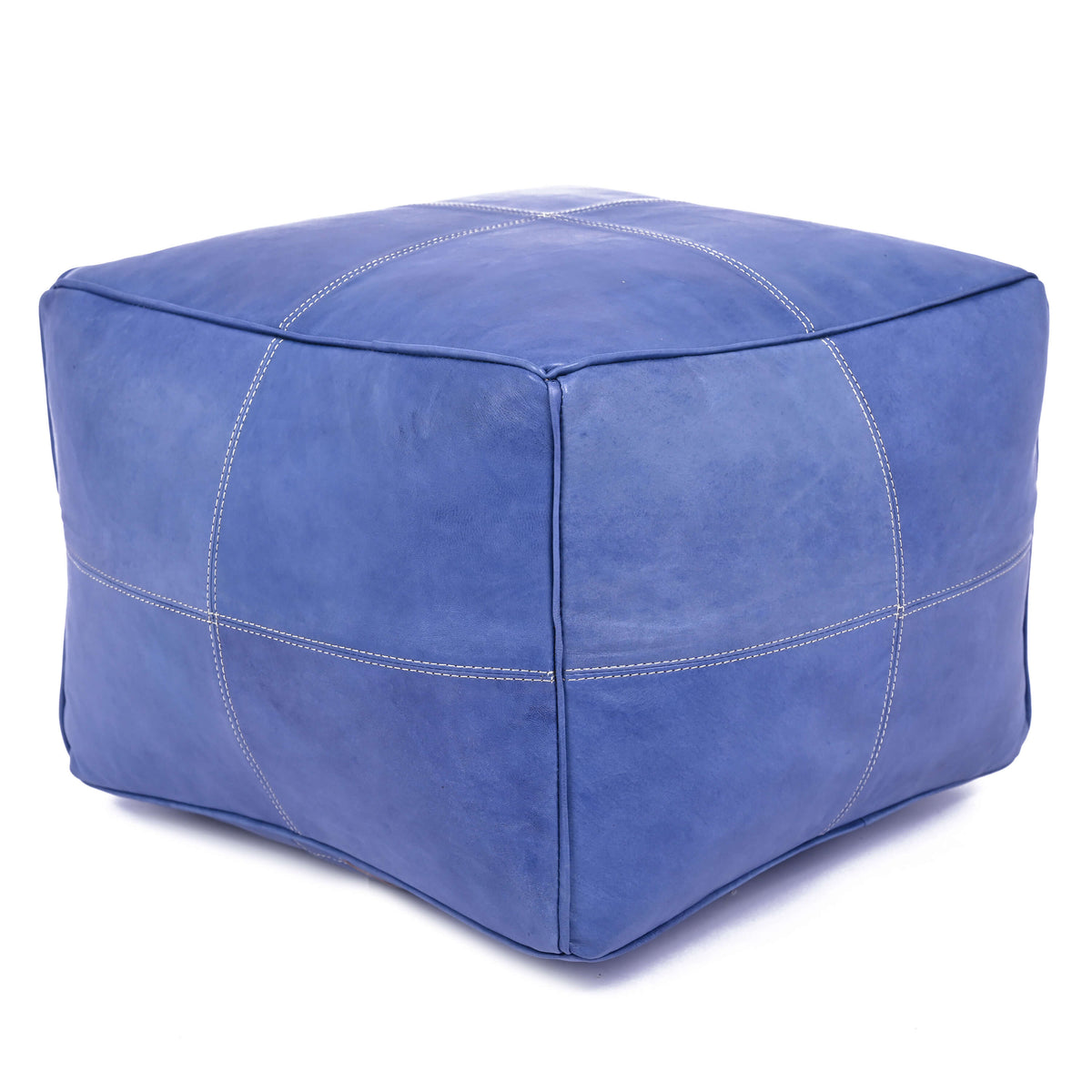
A square leather style fits especially well beside clean sofas, black metal accents, or a sharper modern layout that needs warmth without losing edge.
Color is what bridges modern and boho home decor
Color does a lot of the quiet work here. Most Moroccan leather poufs come in shades that adapt easily: camel, tan, cognac, chestnut, muted blue, clay, and deeper earth tones.
In modern interiors, those colors keep neutrals from feeling cold or overly polished. In modern boho home decor, the same palette echoes rugs, linen, brass, and wood without forcing a perfect match. That shared warmth makes the room feel collected and coherent.
This is also why the piece holds its own in spaces influenced by bohemian style. Boho style looks stronger when the room feels assembled over time. A handmade pouf supports that mood better than a slick accent that looks brand new in the wrong way.
Function keeps the pouf from becoming a passing trend
A decorative object lasts longer when it earns its floor space. That is one of the biggest reasons a Moroccan leather pouf keeps working across different homes.
You can place it in front of the sofa as a footrest. You can pull it closer when guests need a seat. You can top it with a tray and turn it into a temporary side table. You can even move it into a bedroom corner or reading nook when the living room layout changes.
That adaptability appeals to modern homeowners who want every piece to serve a purpose. It also suits boho homes, where the best rooms feel lived in rather than frozen.
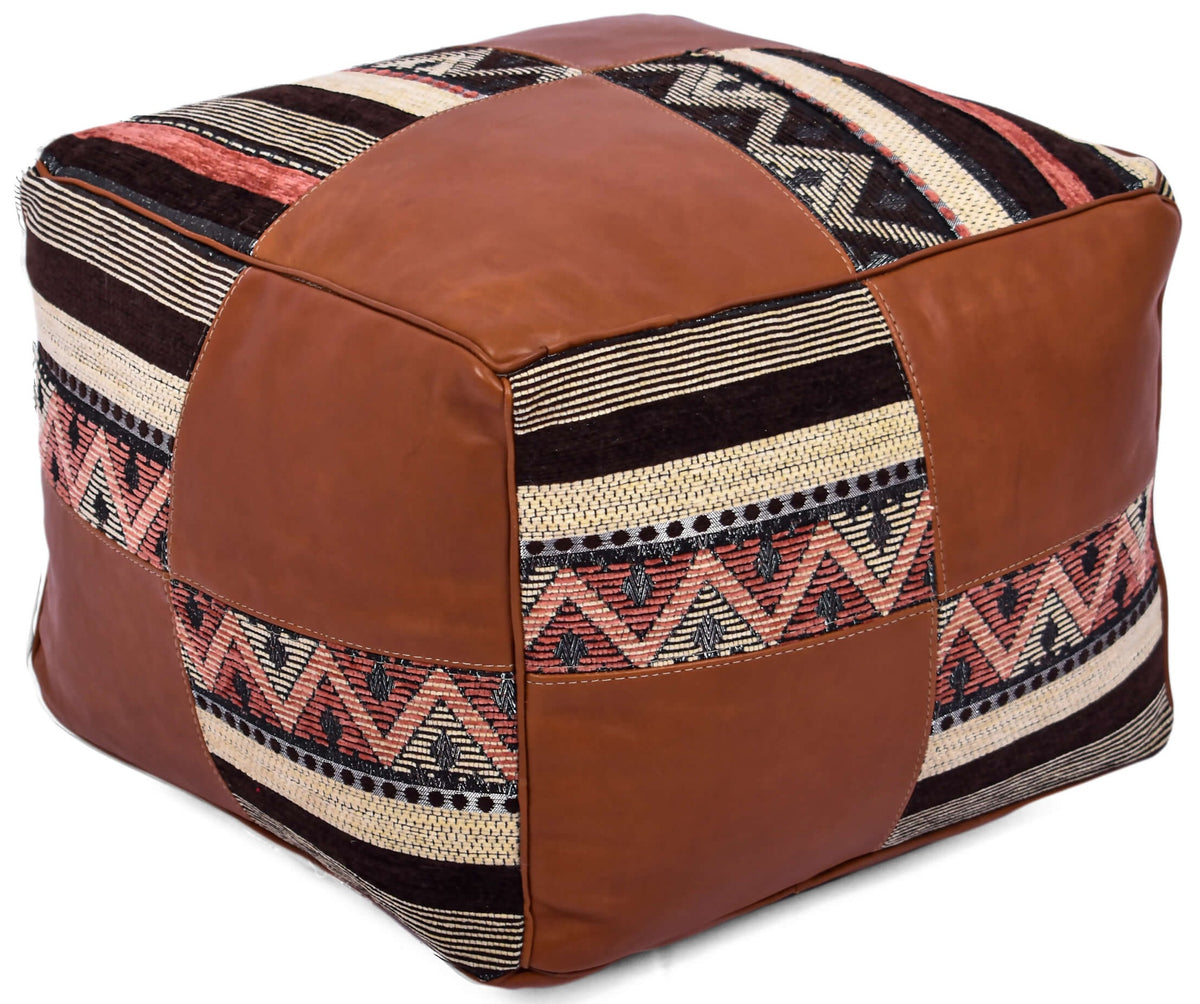
A richer leather finish like this adds warmth fast, especially when the room needs one grounded handmade element.
Care matters if you want the look to age well
Part of the appeal of leather is patina. Small creases and tonal shifts can make the piece look better over time. Still, smart care helps preserve that effect.
For everyday maintenance, a soft damp cloth is often enough to remove dust and surface marks. Harsh cleaners usually do more harm than good. If the leather is top quality, regular light care and sensible placement away from heavy moisture will do more for longevity than constant product treatments.
Final thoughts
Moroccan leather poufs work in both modern and boho homes because they sit in the sweet spot between clean form and lived-in texture. They bring warmth to sharper rooms, structure to softer rooms, and function to both.
That balance is hard to fake. A good pouf looks decorative, but it also behaves like real furniture. That is why it keeps its place as design trends shift.
