History of Moroccan Lamps in Interior Design
Posted by ADIL ROUAY

Moroccan lamps began as the simple clay and bronze oil lamps of the Berber people, were transformed during the Islamic Golden Age when artisans in Fez and Marrakech pierced brass and copper into geometric patterns, and were refined by Andalusian craftsmen arriving from southern Spain. That blend of Berber geometry, Islamic art and Andalusian technique created the Moroccan lamp style used in interiors worldwide today.
Moroccan lamps have lit up interiors for centuries.
Today, American homeowners use them to add warmth and character to any room. But where do these iconic pieces come from?
This guide covers the full history of Moroccan lamps in interior design. You will also find style tips and advice for your home.
The Origins of Moroccan Lamps in Interior Design
Berber Roots
The story starts with the Berber people of North Africa.
Berber artisans made simple oil lamps from clay and bronze. They decorated them with geometric symbols that carried cultural meaning.
Those same symbols — diamonds, stars, interlocking triangles — still appear in Moroccan lamps today.
The Islamic Golden Age
Islam arrived in Morocco in the 7th century. It transformed the art of lamp-making completely.
Islamic art discourages the use of human or animal figures. As a result, artisans focused on geometric patterns and arabesques instead.
Craftsmen in Fez and Marrakech made brass and copper lamps for mosques and palaces. Each pattern encoded spiritual meaning through repeating forms.
Andalusian Influence
Between the 11th and 17th centuries, Muslim artisans left southern Spain for Morocco.
They brought refined techniques from the Alhambra palace in Granada. In addition, they introduced new approaches to light, pattern, and metal.
This mix of Berber geometry, Islamic art, and Andalusian craft created the Moroccan lamp style we recognize today.

How Artisans Make Moroccan Lamps
The Role of the Maâlem
A Maâlem is a master craftsman in Moroccan tradition.
Artisans earn this title after a decade or more of training. They learn pattern systems, metal properties, and finishing techniques by hand.
In the workshops of Fez's medina, Maâlems still use the same tools and stencils their teachers used generations ago.
Materials and Process
Moroccan lamp makers work with brass and copper.
First, a Maâlem traces a stencil onto a flat metal sheet. Then, he uses punches and chisels to pierce the design hole by hole.
The raised edges around each hole catch the light at different angles. That detail gives each lamp its unique glow.
Fez vs. Marrakech Style
Fez lamps tend to be precise and minimal. The metalwork does all the work — no glass inserts, no extra decoration.
Marrakech lamps are more varied. Artisans there use more colored glass and mix traditional patterns with modern shapes.
Both styles are authentic. Your choice depends on whether you prefer a cleaner or a more layered look.
Moroccan Lamps: From Medinas to American Homes
Early Global Interest (1900s–1950s)
European artists discovered Moroccan design in the early 20th century.
Henri Matisse painted in Tangier and brought Moroccan patterns to a wider audience. Architects and collectors followed.
By the 1930s, Moroccan lamps appeared in the homes of tastemakers across Europe and the US.
The Bohemian Wave (1960s–1980s)
Thousands of young Americans traveled through Morocco in the 1960s and 1970s.
Many brought back leather poufs, kilim rugs, and Moroccan lanterns. Those objects became key pieces of the boho interior style.
That wave planted the seeds for the mainstream Moroccan decor market we see today.
Moroccan Lamps Go Mainstream (1990s–Now)
By the 1990s, Moroccan lamps moved well beyond niche decor.
Interior design magazines featured them regularly. Online shopping made it easy to buy directly from Moroccan workshops.
Today, you find them in bohemian living rooms, minimalist entryways, and cozy outdoor patios across the United States.

Moroccan Lamp Styles for Your Home
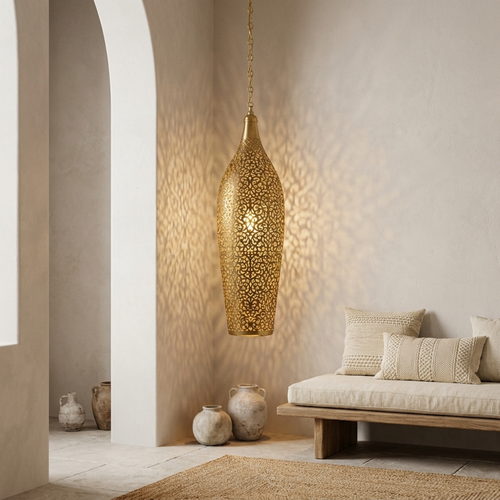
Pendant Lamps
Pendant lamps work well in dining rooms and entryways with high ceilings.
A 20- to 24-inch pendant creates a strong focal point above a table. The shadows it casts make the whole room feel alive.
Best for: dining rooms, entryways, and living rooms with ceilings above 9 feet.
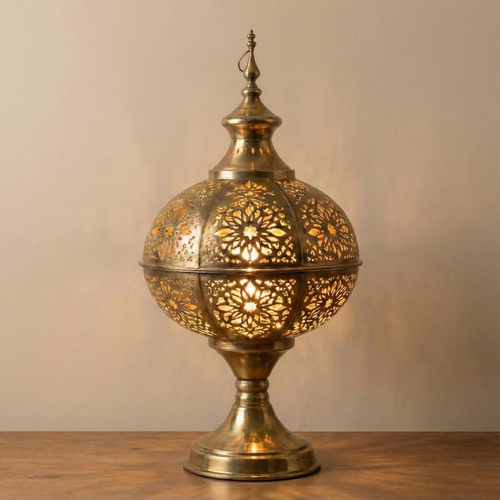
Table Lamps
Table lamps add a warm, intimate glow to any surface.
They suit bedrooms, reading nooks, and side tables well. A small 8- to 10-inch Moroccan table lamp pairs naturally with linen and rattan.
Best for: bedrooms, home offices, and cozy reading corners.
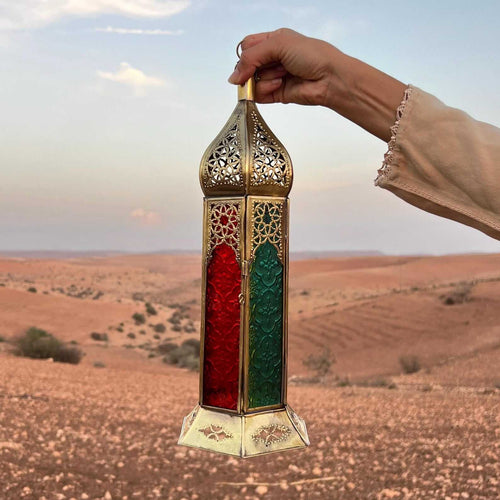
Candle Lanterns
Candle lanterns are the most traditional form of Moroccan lighting.
Use them on a porch, patio, or dining table. LED flameless candles give the same warm flicker without any fire risk.
Best for: outdoor patios, porches, Thanksgiving tables, and holiday decor.
How to Use Moroccan Lamps in Interior Design
Moroccan lamps work in more interior styles than most people expect.
Bohemian and Eclectic Rooms
Pair a large brass pendant with Berber rugs, rattan chairs, and terracotta accessories.
The warm metallic tone ties together a layered, global look. Antique brass finishes suit earthy color palettes — terracotta, sage, ochre, and sand.
Minimalist and Contemporary Rooms
One carefully chosen Moroccan lamp transforms a minimal white room.
The geometric cutwork reads as a single, clean form against a plain wall. The shadows it projects add texture without any clutter.
Outdoor Spaces
Solid brass resists corrosion naturally. Moroccan hanging lamps suit covered patios and pergolas well.
Hang two or three lanterns at different heights for a layered outdoor look. Use LED candles to keep things safe and weather-resistant.
How to Care for Your Moroccan Lamp
• Dust the exterior weekly with a dry microfiber cloth.
• Clean with a soft cloth dampened in mild soapy water. Dry it right away.
• Restore shine with a small amount of brass polish, then buff with a soft cloth.
• Avoid abrasive scrubbers — they scratch the brass surface.
• For electric lamps, check the wiring once a year and replace it if it shows wear.
• Bring outdoor lanterns inside during heavy rain unless they carry a full weather rating.
If your lamp develops a green patina, you can leave it. Many design traditions consider this natural aging part of the beauty.

Frequently Asked Questions
What makes Moroccan lamps unique compared to other lighting?
Moroccan lamps project light through pierced metal cutouts. This creates shifting shadow patterns on every nearby wall and surface.
Most other lighting fixtures direct light downward. Moroccan lamps fill the entire room with pattern and warmth.
Can Moroccan lamps work in a modern American home?
Yes — and often powerfully. A single Moroccan pendant in a clean white room creates a striking focal point.
Choose a lamp with a simple silhouette — hexagonal or cylindrical forms work best in modern spaces.
How do I tell an authentic Moroccan lamp from a replica?
Lift the lamp. Solid brass feels heavy for its size. Machine-made replicas feel light and hollow.
Run your finger inside the cutouts. Hand-pierced holes have small variations. Machine holes are perfectly uniform.
Where can I buy authentic Moroccan lamps in the US?
Buy from retailers who source directly from Moroccan workshops and can name the city of origin.
King of Handmade ships handmade lamps from Marrakech to the US. Visit kingofhandmade.com/collections/luminous-lighting to explore the full range.
Are Moroccan lamps expensive?
Prices range from around $40 for a small candle lantern to $400+ for a large handcrafted pendant.
Mid-range pieces between $100 and $300 offer the best value. You get genuine hand-craftsmanship without paying collector prices.
Final Thoughts
Moroccan lamps in interior design have traveled far — from ancient medinas to American living rooms and patios.
Their appeal has never faded. They bring warmth, pattern, and cultural depth to any space.
Whether you choose a brass pendant for your dining room or a candle lantern for your porch, a Moroccan lamp always delivers. Explore the full collection of authentic handmade pieces at kingofhandmade.com/collections/luminous-lighting — shipped directly from Marrakech to your door.